

Racial Wealth Gap Project
Introduction
Over the past 50 years, the racial wealth gap between Black and White families in the United States has not improved. The gap remains very large, mainly because of ongoing inequality in wealth, income, education, and other areas. These gaps continue because of historical and systemic racism built into American institutions and policies.
This analysis will explore the differences in wealth trends between Black and White families from 1963 to 2016 and highlight how these gaps have changed over time.
Data can be found in this Github Repo.
Exploratory Data Analysis (EDA)
Family Wealth
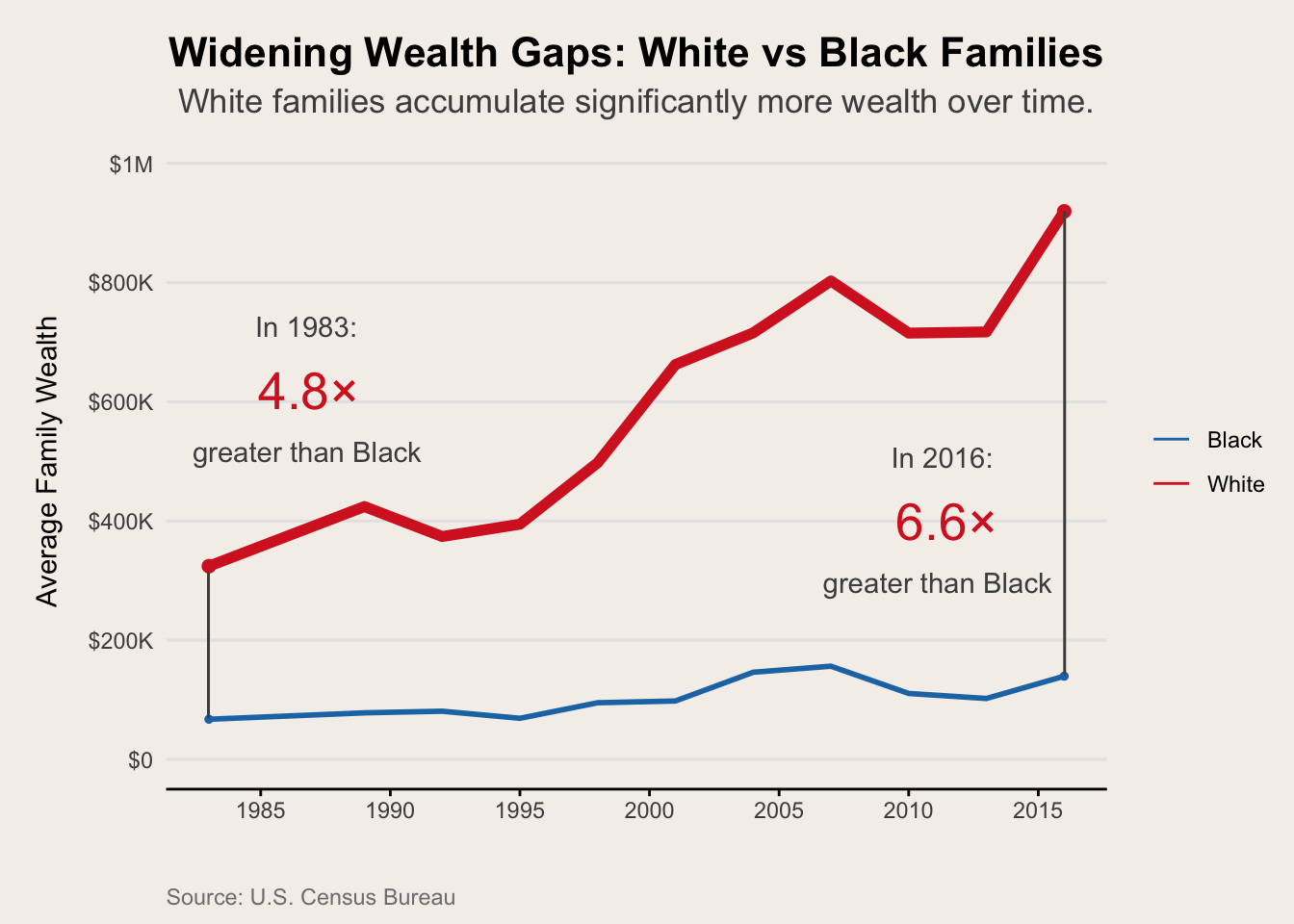
The data clearly shows a long-standing and large racial wealth gap in the United States over the past 30 years. White families have consistently had more wealth than Black families during this entire period.
In 1983, White families had about 4.8 times more wealth than Black families. By 2016, even after decades of economic growth and policy changes, this gap had grown larger, with White families now having 6.6 times more wealth than Black families. This shows economic inequality between races has actually gotten worse, not better.
While all groups saw some increase in wealth during this time, the increases were extremely uneven. White family wealth rose from about $324,000 in 1983 to nearly $930,000 in 2016—an increase of over $600,000. Black family wealth grew from around $67,000 to only $140,000, gaining just $73,000. For every dollar Black families gained, White families gained more than eight dollars.
The financial crisis of 2008 harmed all families, but White families recovered faster and more completely. By 2016, their wealth not only recovered but surpassed pre-crisis levels, while Black families struggled to catch up.
This visualization illustrates clearly how economic growth has largely benefited White families. It suggests there are larger problems within the economic system that continue to limit financial opportunity for Black Americans, causing this wealth gap to grow rather than shrink over time.
Lifetime Wealth
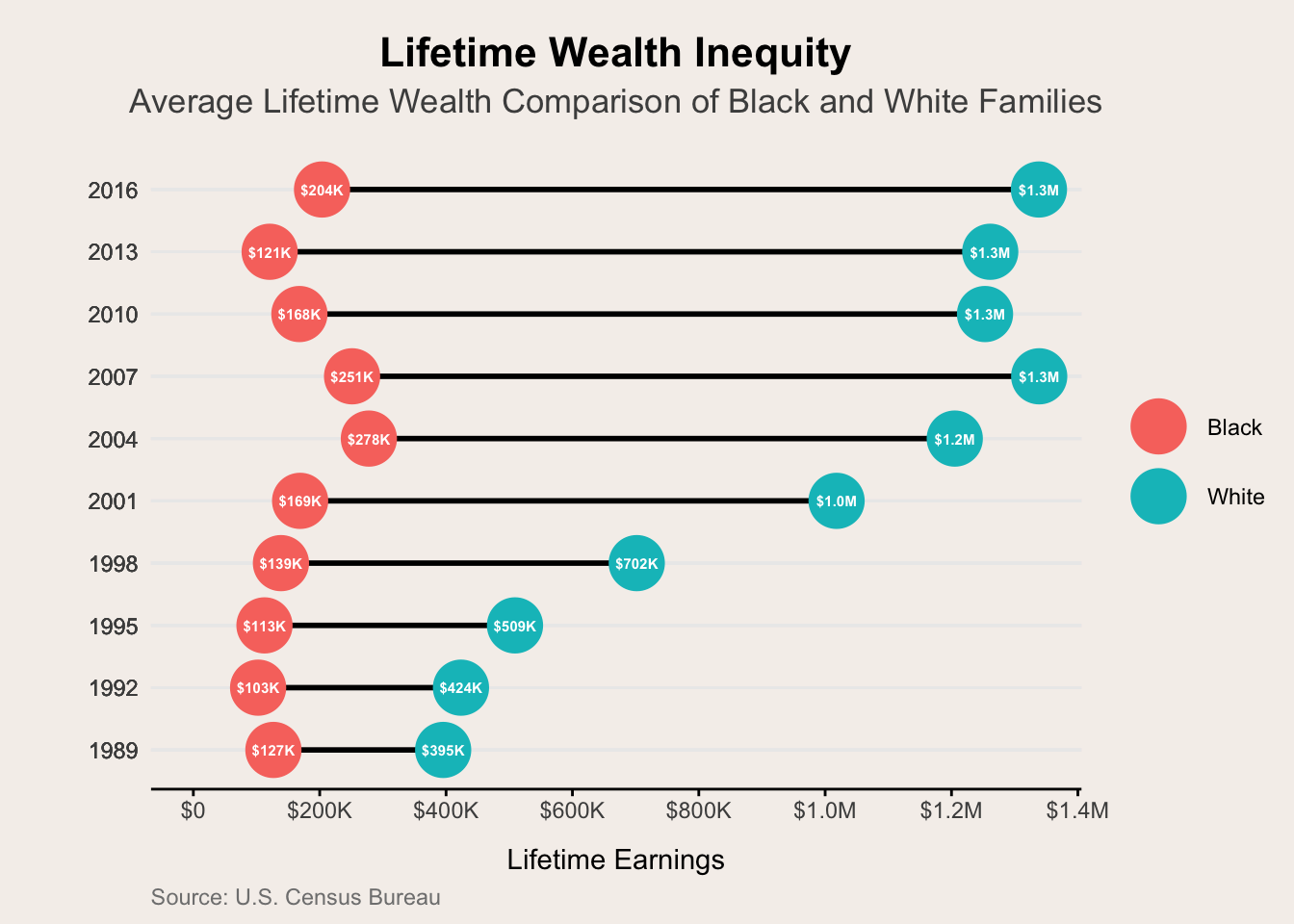
This visualization clearly shows a large and long-lasting difference in average lifetime wealth between Black and White Americans. White Americans consistently build up significantly more wealth over their lifetimes—around $1.3 million compared to just $278,000 for Black Americans.
These gaps are important because lifetime wealth—not just annual income—influences a family’s ability to handle financial emergencies, secure retirement, and pass on financial help to future generations. The fact that this gap hasn’t changed significantly over time highlights how economic inequalities affect people throughout their lives, building up disadvantages that impact future generations as well.
Home Ownership
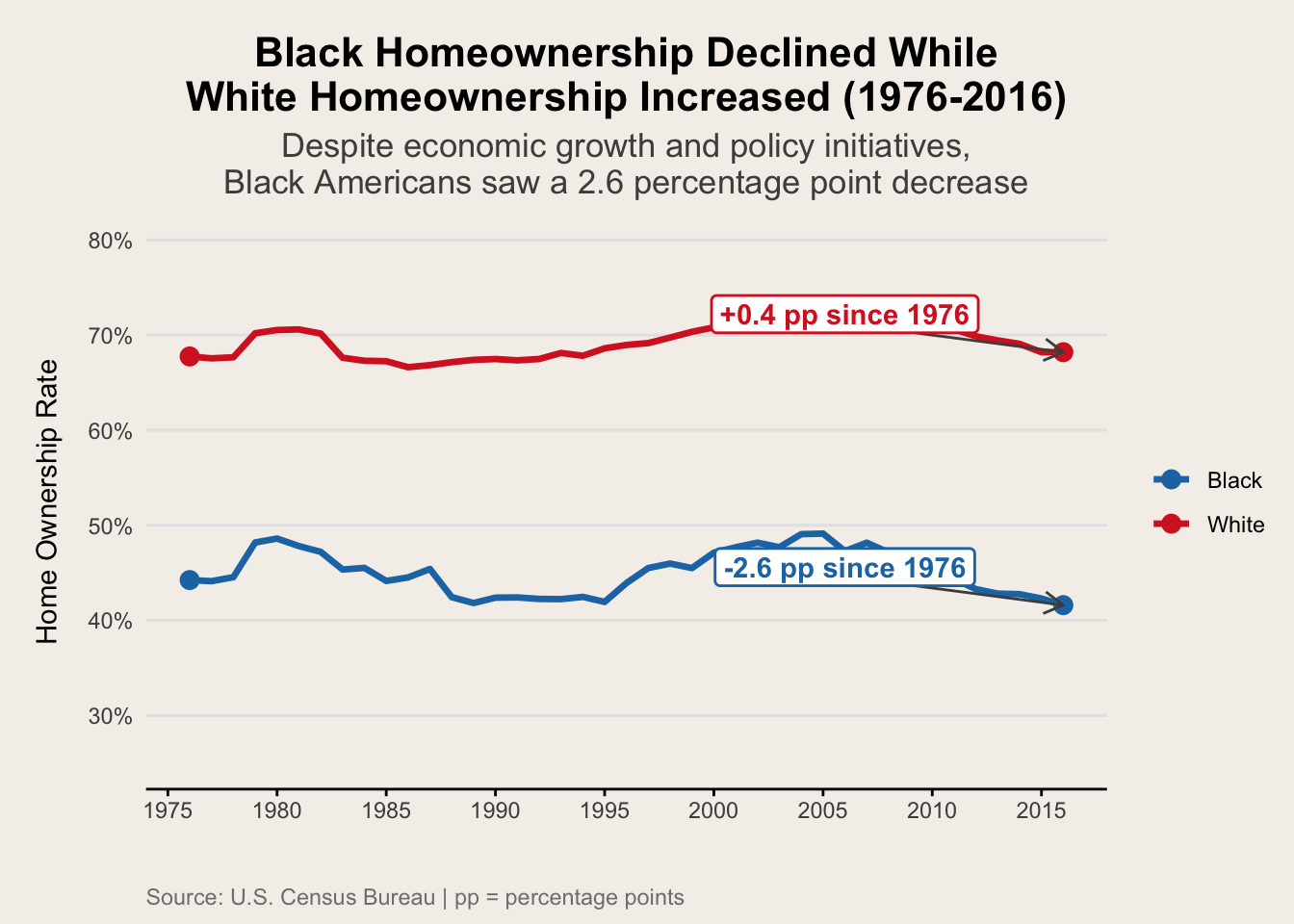
This visualization shows a troubling gap in homeownership trends between racial groups. Despite 40 years of economic growth and housing policies, homeownership among Black Americans actually declined by 2.6 percentage points from 1976 to 2016.
This decline is very different from White Americans, who saw a small 0.4 percentage point increase (from already high rates). This widening gap clearly shows that housing opportunities—and the wealth they create—are not shared equally.
This trend matters because homeownership is the main way most American families build wealth. Declining Black homeownership contributes directly to the wider wealth gap we’ve discussed.
Retirement
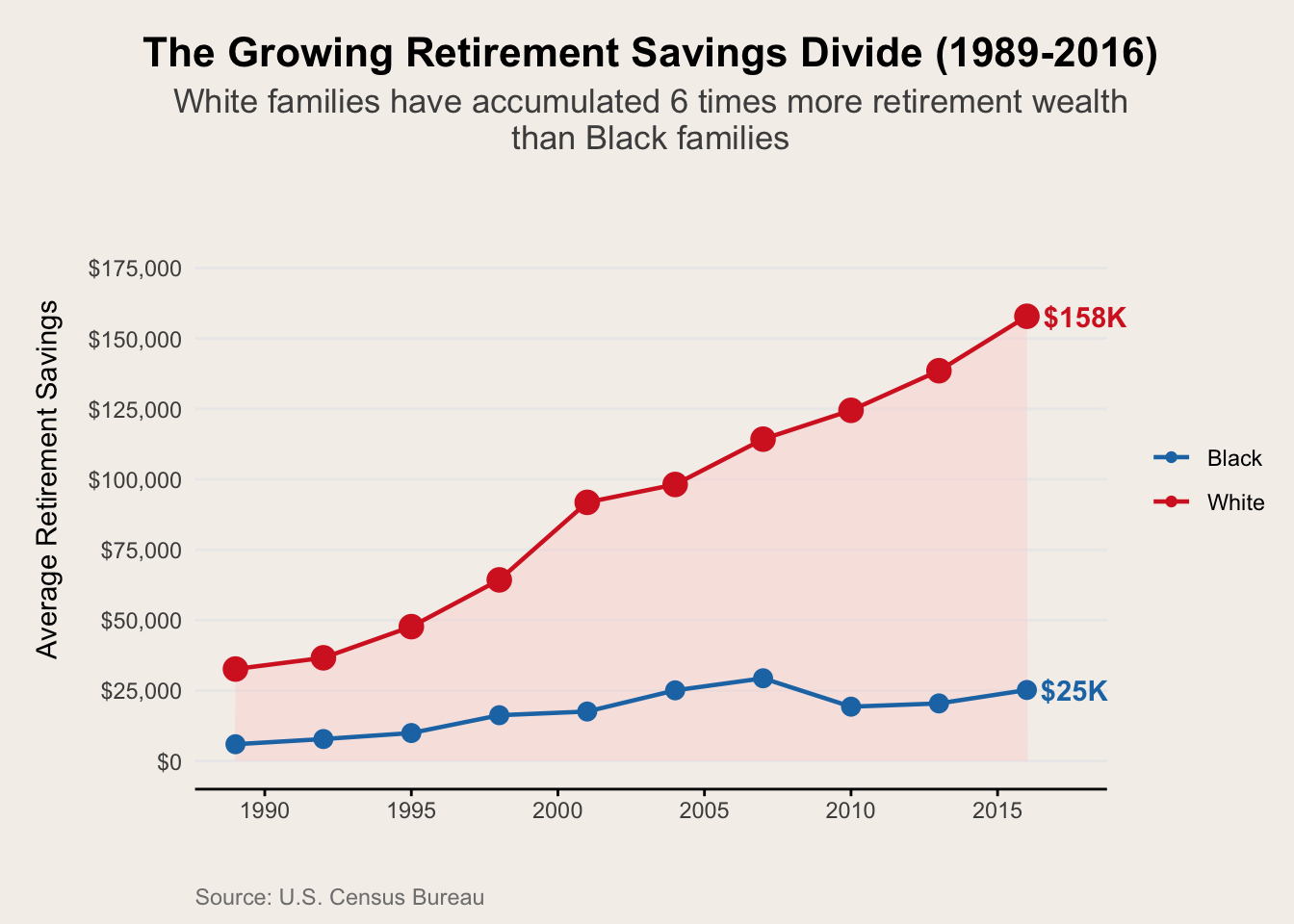
This visualization shows a major racial gap in retirement savings, which has grown significantly between 1989 and 2016. White families have built around $158,000 in retirement savings, about 6 times more than Black ($25,000) families.
This $133,000 gap means years of difference in retirement security. All groups started at lower levels in 1989, but White families’ savings grew rapidly as retirement savings shifted from company pensions to individual retirement accounts. Black families, however, saw only very small improvements during this period.
Summary of Findings
My analysis of racial economic disparities across multiple dimensions—total wealth, lifetime earnings, homeownership, and retirement savings—reveals a troubling pattern of persistent and often widening gaps between White Americans and racial minorities, particularly Black Americans.
-
Widening Total Wealth Gap: The wealth disparity between White and Black families has grown significantly, from White families having 4.8 times more wealth than Black families in 1983 to 6.6 times more by 2016. While White family wealth grew by over $600,000 (from $324,000 to $930,000), Black family wealth increased by just $73,000 (from $67,000 to $140,000)—meaning White families gained $8 for every $1 gained by Black families.
-
Lifetime Wealth Accumulation: White Americans accumulate approximately $1.3 million in average lifetime wealth compared to $278,000 for Black Americans. This reflects substantial lifetime earning disparities.
-
Declining Black Homeownership: While White homeownership rates increased by 0.4 between 1976 and 2016, Black homeownership actually declined by 2.6 percentage points—a striking regression in a critical wealth-building area.
-
Retirement Security Crisis: The retirement savings gap has reached alarming levels, with White families accumulating $158,000 in retirement assets compared to just $25,000 for Black families, an over 6 times difference that threatens the dignity and security of millions of aging Americans.
Systemic Patterns and Implications
These disparities are not isolated phenomena but interconnected manifestations of systemic inequalities. Several consistent patterns emerge:
- Compounding Disadvantages: Initial disparities in income and opportunity compound over time through reduced investment returns, homeownership barriers, and limited retirement savings access.
- Crisis Vulnerability: Economic downturns like the 2008 financial crisis disproportionately impact minorities, with White Americans recovering more quickly and completely.
- Intergenerational Effects: These gaps perpetuate across generations as reduced wealth limits educational opportunities and financial support for children.
- Policy Failure: Despite decades of economic growth and anti-discrimination policies, racial economic gaps have persisted or worsened, suggesting current approaches are insufficient.
The combined effect of these disparities creates a comprehensive system of economic disadvantage that extends beyond individual dimensions. Without significant structural intervention, these gaps will likely continue to widen, threatening America’s promise of equal opportunity and economic mobility for all citizens.